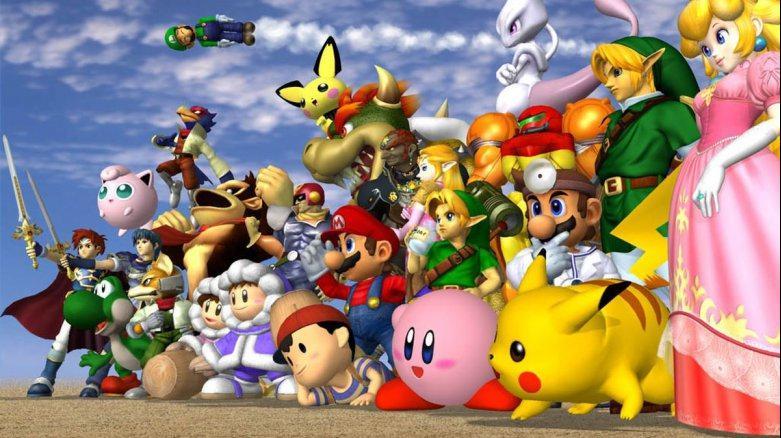
Super Smash Bros. (1999)
HAL Laboratory / January 21, 1999 / Rated Everyone
Data last updated August 25, 2026
As an affiliate, PixelScry may earn a commission from qualifying purchases made through these links.
Super Smash Bros. is a fighting video game developed by HAL Laboratory and published by Nintendo for the Nintendo 64 home video game console. It was released in Japan on January 21, 1999; in North America on April 26, 1999; and in Europe on November 19, 1999. Super Smash Bros. is the first game in the Super Smash Bros. series.
The game is a crossover between many different Nintendo franchises, including Mario, The Legend of Zelda, Star Fox, Donkey Kong, Metroid, Mother, F-Zero, Yoshi, Kirby, and Pokémon. It presents a cast of characters and locations from these franchises and allows players to use each character's unique skill sets and even take advantage of the stage's offensive events to inflict damage, recover health, and ultimately attempt to knock opponent characters off the stage.
It received mostly positive reviews from the media and was commercially successful, selling over 5 million copies worldwide by 2001, with 2.93 million sold in the United States and 1.97 million copies sold in Japan. It was given an Editors' Choice award from IGN for the "Best Fighting Game". Super Smash Bros. was commercially successful, and became a Nintendo 64 Player's Choice title. Its successor, Super Smash Bros. Melee, was released for the GameCube in 2001. The game spawned a series of sequels for each successive Nintendo console.
Hirokazu Ando is a Japanese composer. Along with Jun Ishikawa, Ando is best known for composing for the Kirby video game series. He has also composed for other games developed by the company, such as Super Smash Bros. (1999), Super Smash Bros. Melee (2001) and the BoxBoy! series.
Read more on Wikipedia →Live listings on eBay
See all →
Super Smash Bros. (Nintendo 64, 1999) TESTED AND AUTHENTIC
USD 49.99
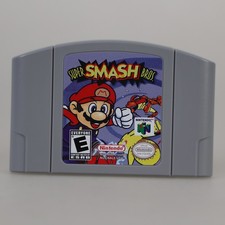
For/Nintendo-n64 US Version Super Smash Bros 64 - Super SmashBros US Stock
USD 28.99

Super Smash Bros Nintendo 64 N64 1999 Authentic Game Cartridge Mario Fighting
USD 48.00

Super Smash Bros. (Nintendo 64 N64, 1999) Authentic Cartridge Tested/Working!
USD 56.99
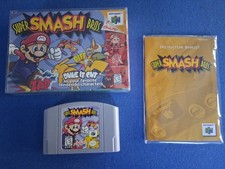
Super Smash Bros (Nintendo 64) Tested/Works Authentic CIB Complete
USD 160.00
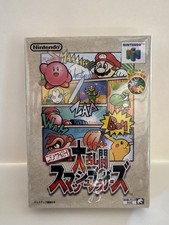
Nintendo Dairantou Smash Brothers Game super smash brothers Japanese
USD 49.99
Sponsored — PixelScry may earn a commission from qualifying eBay purchases made through these links.
More like this